Everything You Need To Know Before Designing Your Dream Kitchen
A kitchen is one of the most technically complex spaces in a residence. Its success is not measured by how it looks on completion day, but by how efficiently it functions over years of daily use. Most kitchen failures are not material failures. They are planning failures.
Storage Is About Logic, Not Volume
One of the most common design errors is using deep drawers indiscriminately. While they appear premium, they often result in wasted internal space. Cutlery, for example, requires shallow drawers of approximately 5 to 8 cm. When these are placed inside deep drawers, nearly half the volume becomes unusable.
Effective kitchen storage is layered and purpose driven. Shallow drawers are designed for cutlery and small tools, medium depth drawers for plates and utensils, and deep drawers only where bulky items demand it. Storage should respond to what is being stored, not to visual symmetry alone.
Heights Must Be Designed, Not Assumed
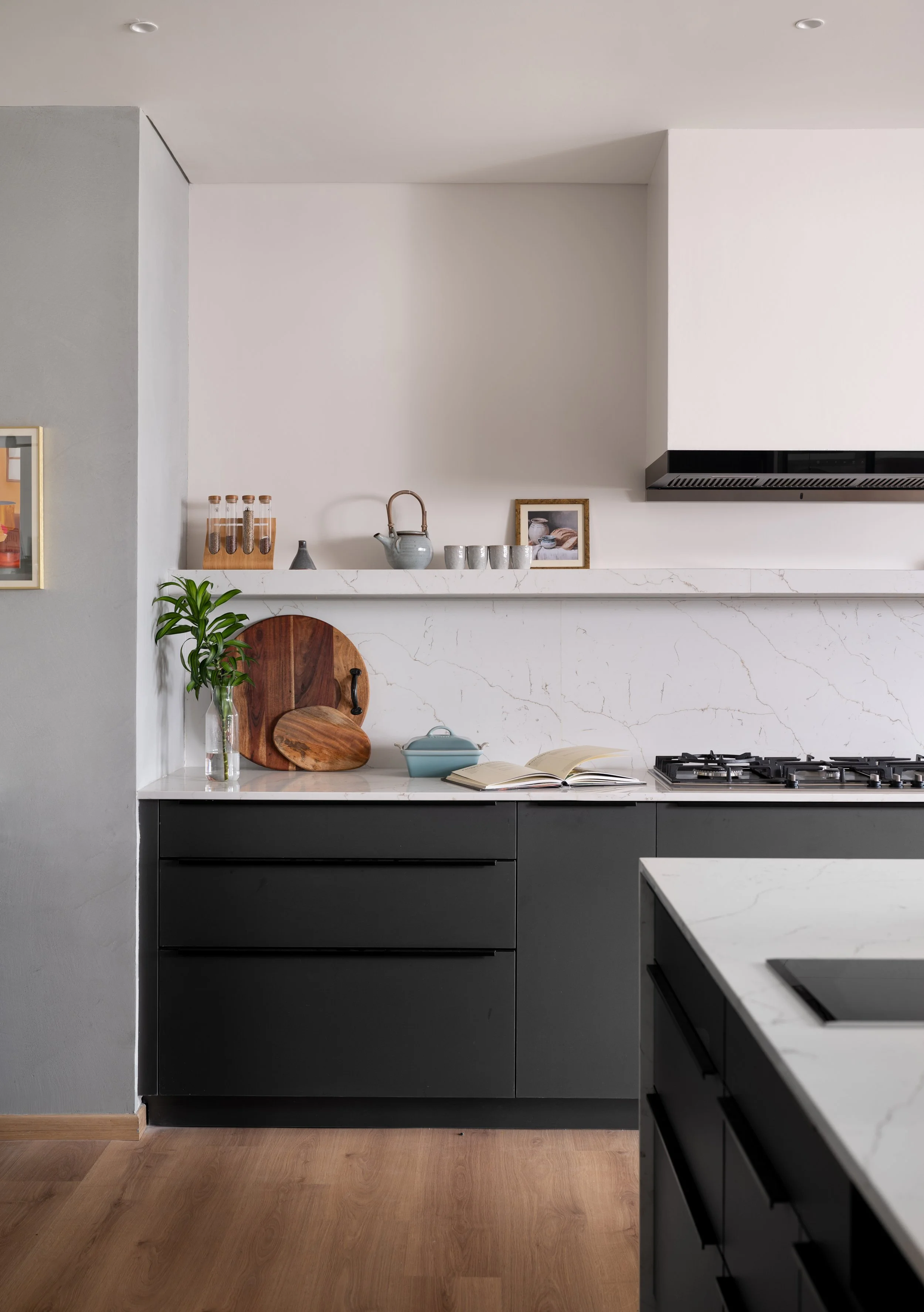
Standard kitchen heights are often treated as fixed rules, but kitchens are ergonomic workspaces shaped by the people who use them. Counter heights, wall cabinet placement, and tall storage must respond to reach, posture, and workflow. When heights are assumed rather than designed, they lead to long term strain and inefficient movement.
Wall units placed too low compromise counter usability, while units placed too high reduce accessibility. Similarly, full height tall units that extend to the false ceiling may look seamless but often result in storage that is rarely used. A well designed kitchen balances reach, visibility, and clearance, adapting standard dimensions to the user rather than relying on them blindly.
Carcass Quality Determines Kitchen Longevity
Clients often focus on shutter finishes, but the carcass defines the kitchen’s structural life. Daily exposure to moisture, steam, spills, and heat makes a waterproof or water resistant internal structure essential, typically BWP plywood or moisture resistant boards.
Shutters can be replaced. The carcass cannot be changed without dismantling the entire kitchen. Compromising here affects durability, alignment, and long term performance.
Bonus tip: The carcass below the sink can be cladded with a metal sheet, as this area is most prone to water leakage or seepage.
Carcass strength also impacts hardware performance. Hinges and drawer channels are designed for specific loads, and heavy drawers such as those storing ceramic or glassware require stronger hardware.
Bonus tip: Hardware selection should be based on cabinet size and intended use rather than using the same system throughout the kitchen.
Shutter Materials Should Be Chosen for Performance
Material selection should respond to exposure levels, maintenance expectations, and budget rather than trends alone. Each shutter material performs differently under daily kitchen conditions, which directly impacts durability and upkeep.
Practical Material Breakdown
Laminate: Most cost effective and easiest to maintain
Veneer and PU: Allow mouldings and character detailing but require more care
Acrylic and glass: Highly durable, non porous, easy to clean, and resistant to oil absorption
Metallic finishes: Offer a premium appearance and sit at a higher cost bracket
A designer’s role is to guide this selection based on realistic usage and budget, ensuring the chosen finish performs well over time rather than only looking good at installation.
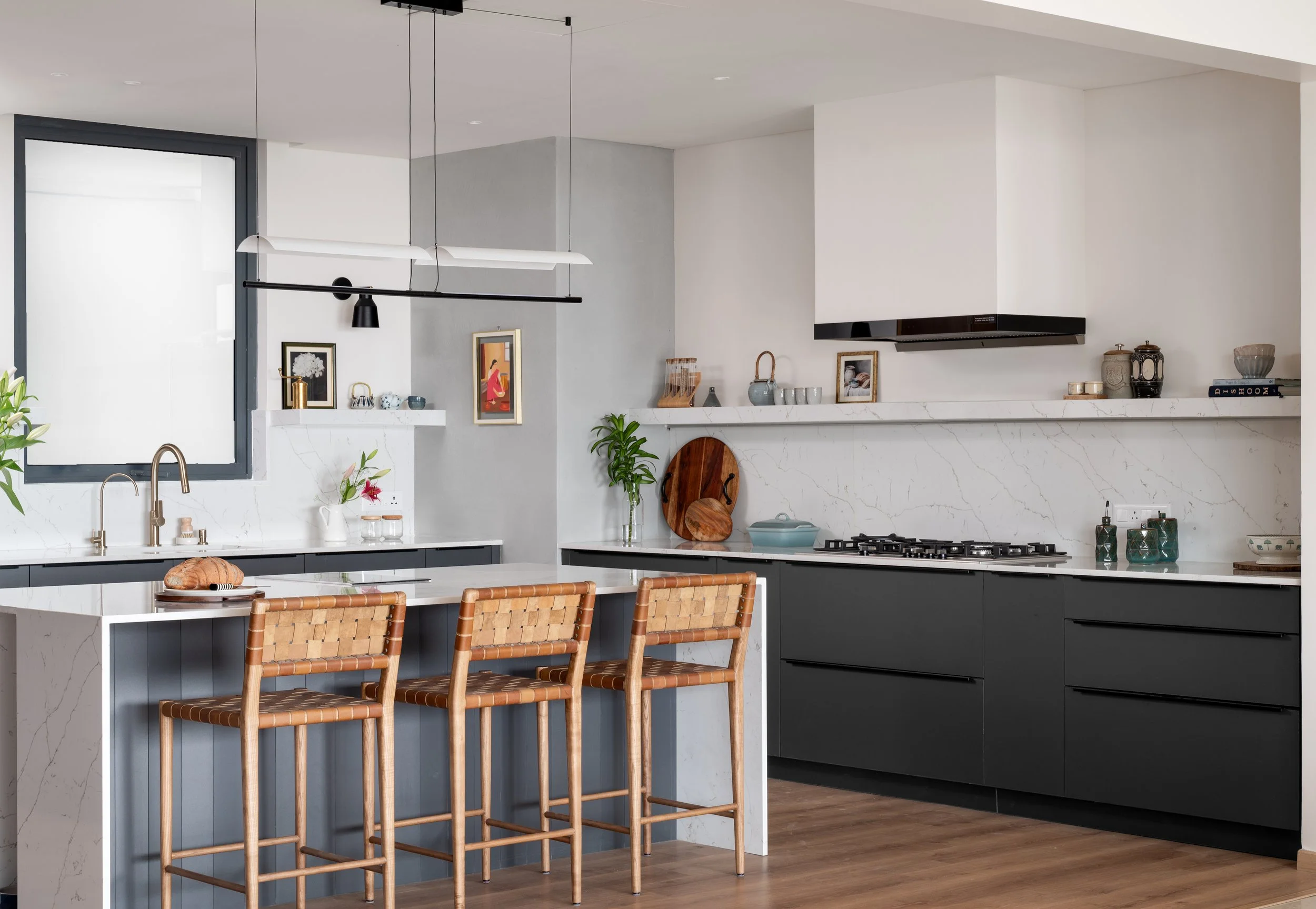
Dry Kitchen vs Wet Kitchen Can Be a Game Changer
If space permits, separating the kitchen into dry and wet zones significantly improves usability and longevity. It allows finishes and hardware to be chosen based on actual usage rather than visual appeal alone.
Dry kitchen: Used for light cooking, entertaining, and display focused finishes
Wet kitchen: Designed for heavy cooking, with higher exposure to heat, oil, and water
This separation allows premium finishes to be used where appropriate, while durable materials and stronger hardware are reserved for zones that handle higher wear.
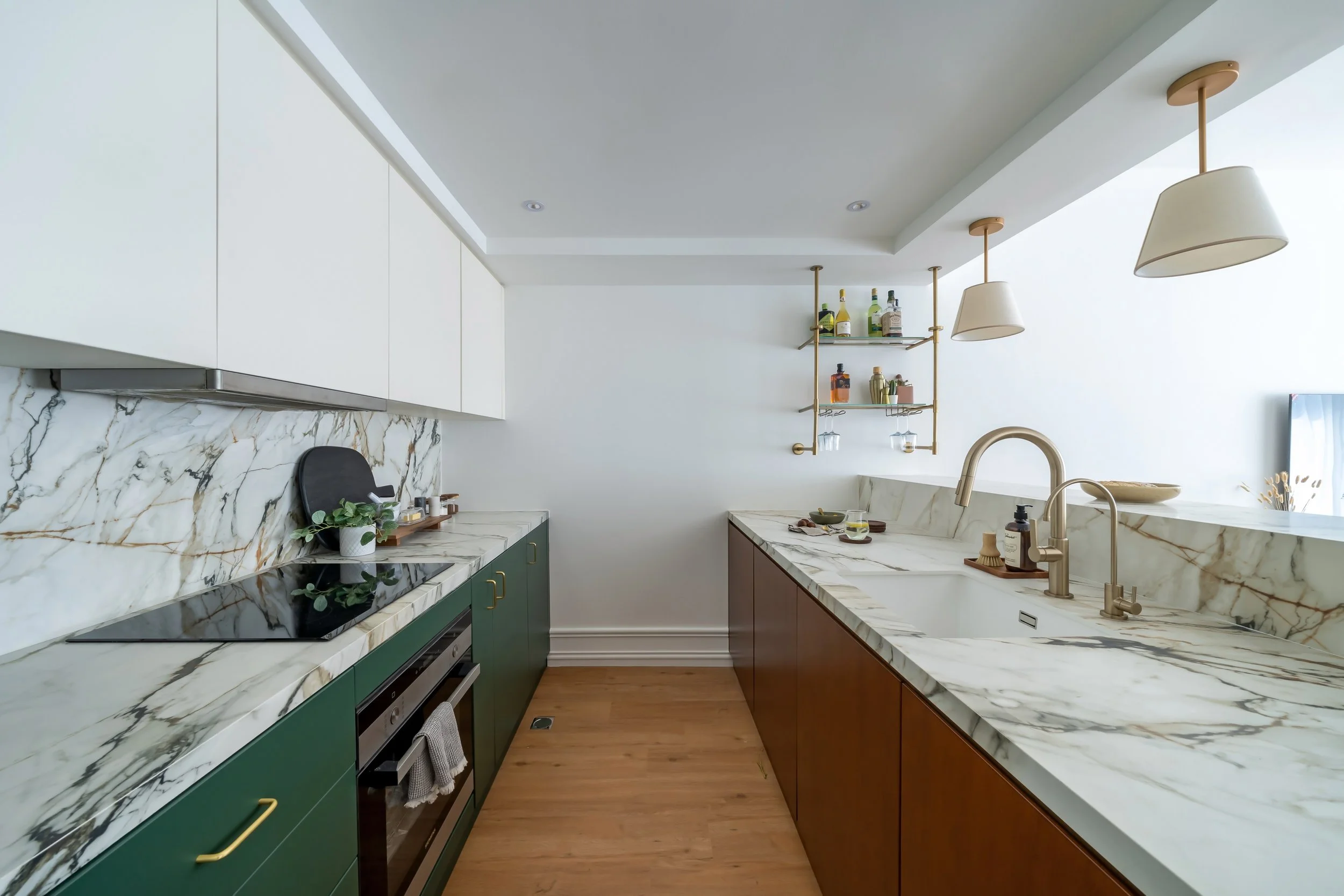
Countertop Choice Defines How Clean Your Kitchen Feels
A kitchen can be spotless and still appear unclean depending on the countertop material. Since the countertop is the most used surface in the kitchen, its performance directly affects hygiene and visual order.
Countertop selection should be based on how much cooking happens rather than appearance alone.
Marble: Porous and prone to staining, better suited for dry kitchens
Low quality quartz: Can absorb stains and moisture over time
High quality quartz: One of the safest options for wet kitchens
Sintered stone and porcelain slabs: Offer excellent durability if budget permits
Choosing the right countertop material ensures the kitchen stays easier to maintain and visually clean over time.
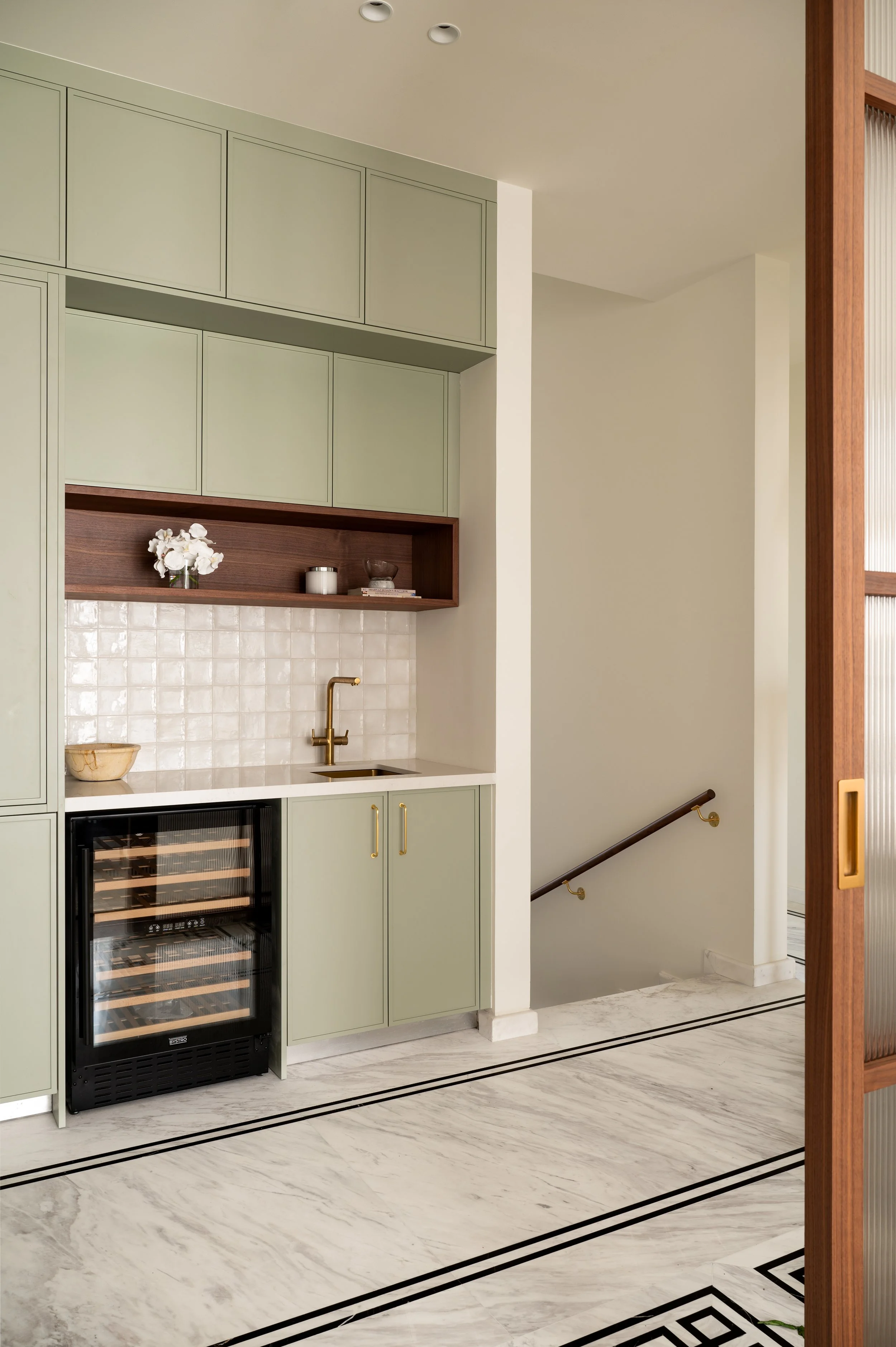
Appliance Planning Is Also About Maintenance
Appliance planning goes beyond visual alignment. Built in appliances must be designed for long term use, which includes easy servicing, ventilation, and future replacement.
Ventilation gaps, service access, door swing clearances, and replacement tolerances must be accounted for during design. Installations that are too tight may look seamless initially but often create problems during servicing or upgrades.
One often overlooked aspect of appliance planning is maintenance.
Consider sourcing appliances from a single brand
Opt for an Annual Maintenance Contract
Regular servicing of hobs, chimneys, and ovens is rarely prioritised, yet it directly impacts hygiene, safety, and appliance lifespan. Appliance planning is a technical exercise, not just a visual one.
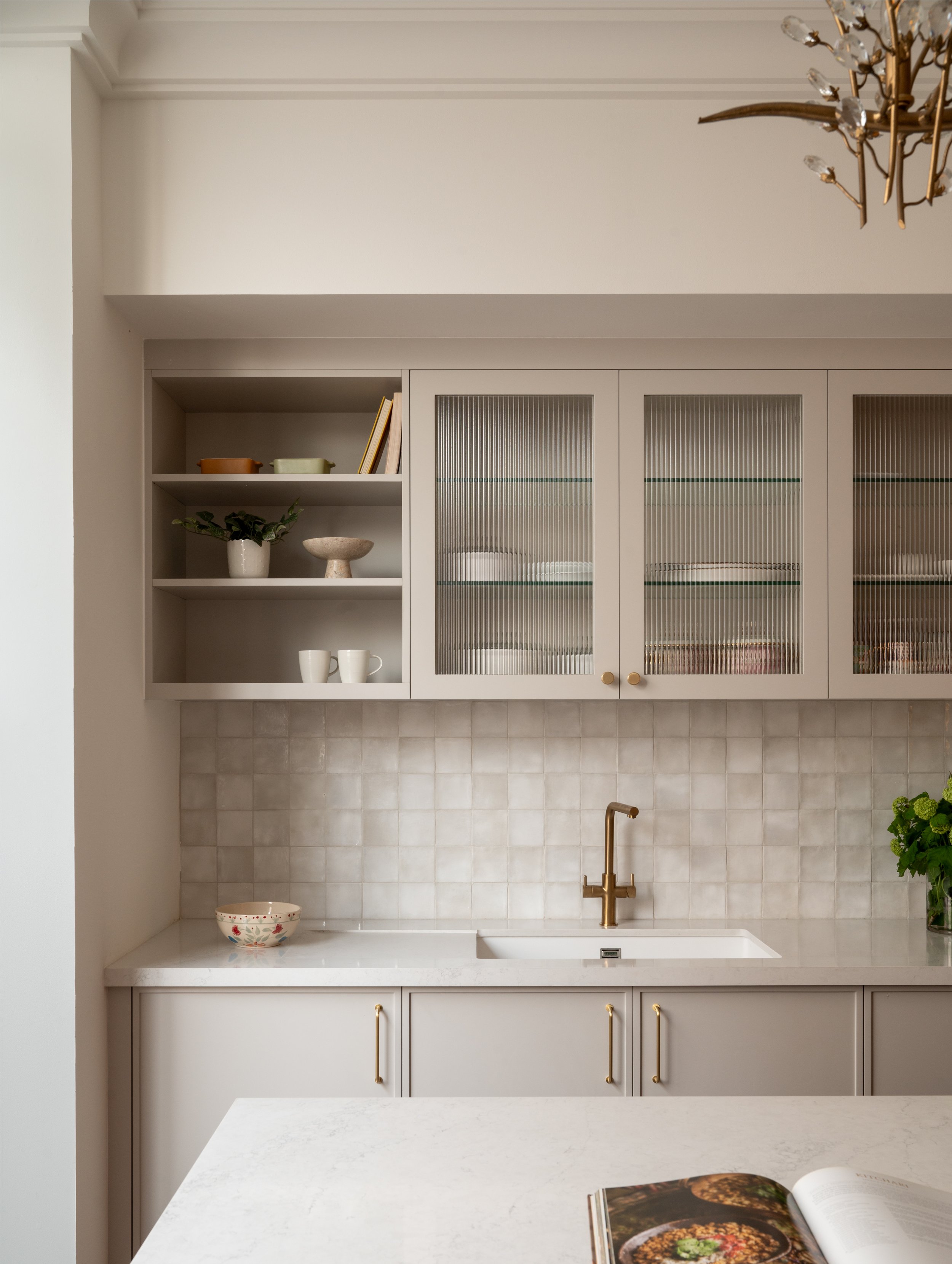
Electrical and Plumbing Coordination Is Critical
Many kitchen issues arise from late stage coordination between cabinetry, electrical points, and plumbing lines. Electrical loads, appliance wattage, concealed sockets, and service access must be resolved before cabinetry execution.
Similarly, plumbing positions must align precisely with sink units, dishwashers, and waste systems. Post installation adjustments are disruptive and expensive.
Lighting and Ventilation Are Core Design Elements
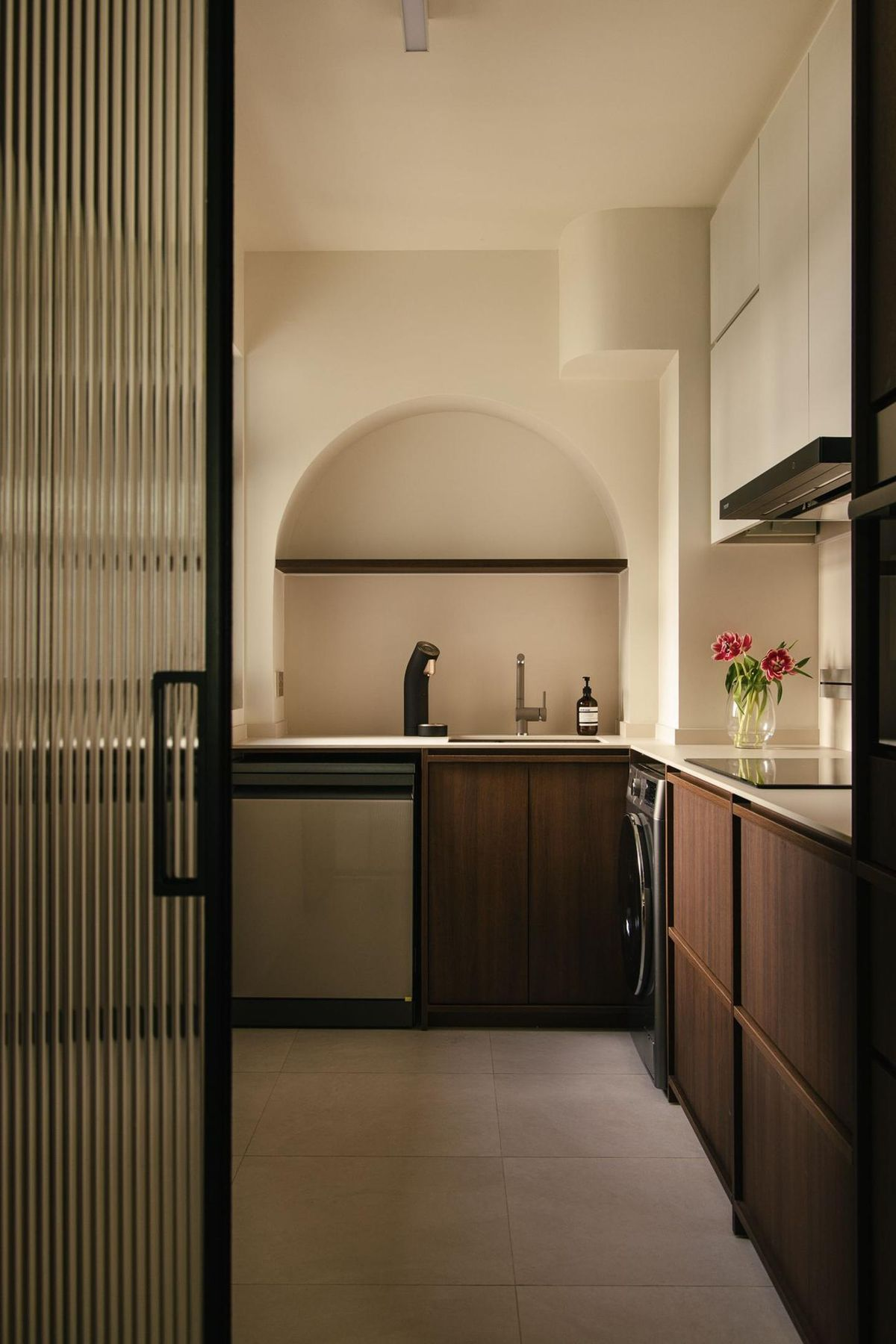
Lighting and ventilation must be integrated at the planning stage, as they directly affect hygiene, comfort and visibility.
Cooking requires clear, functional lighting rather than warm ambient tones. A well designed kitchen lighting plan should include:
Neutral or white light for active cooking
Warm light for non working hours
Under cabinet task lighting for countertops
Ideally, lighting systems should allow switching between tones based on use, ensuring the kitchen remains both functional and comfortable throughout the day.
The Biggest Mistake to Avoid
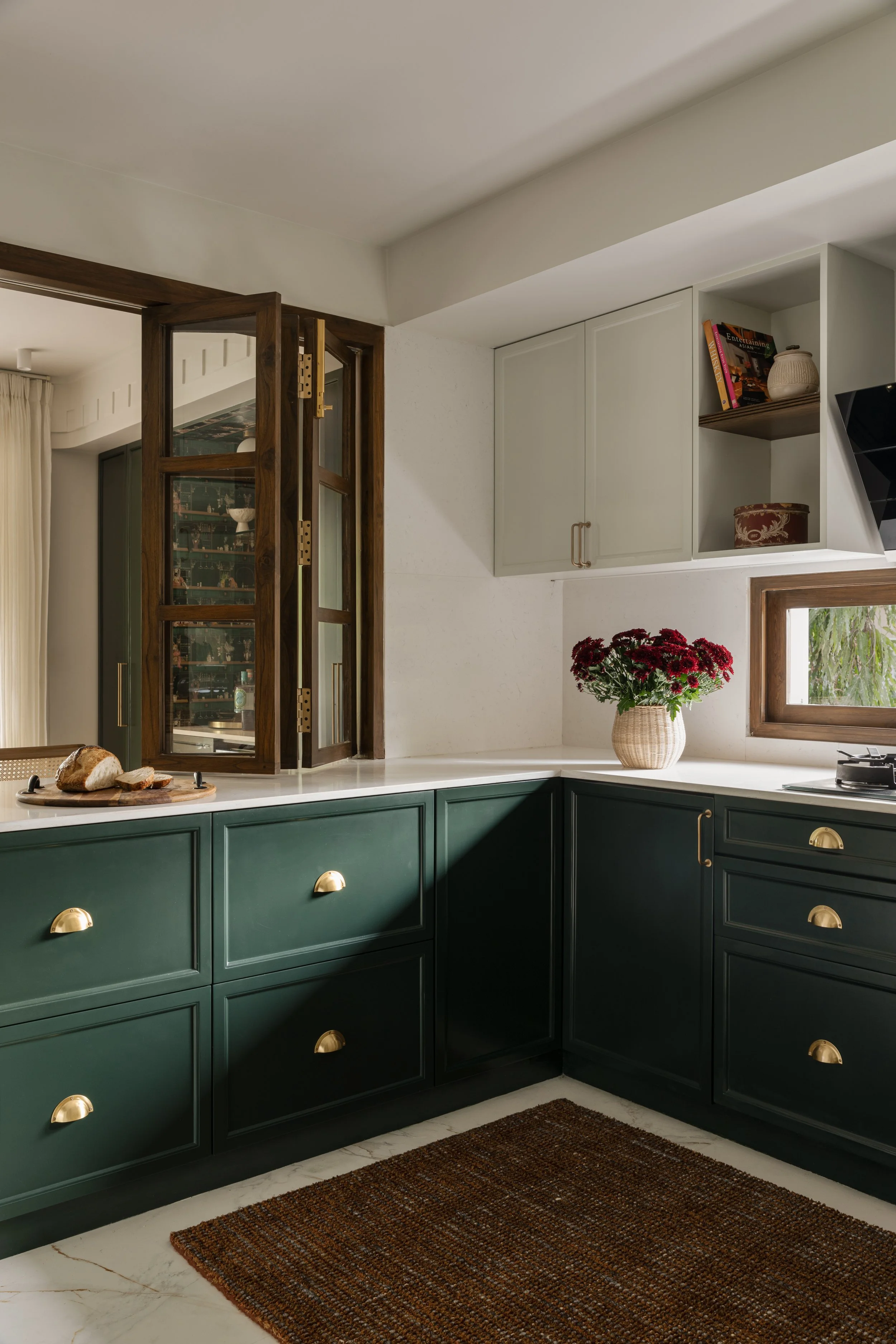
Finalising the kitchen layout too quickly. Once cabinetry, electricals, and plumbing are executed, changes become costly and disruptive.
A well designed kitchen feels effortless because it has been questioned, tested, and refined before execution.
Review Your Kitchen Before Designing
Notice how you actually cook each day
Observe where oils, spices, and utensils naturally sit
See which side of the hob you use most
Understand what stays on the countertop and why
Clarity at this stage prevents compromises later.
Final Thought
Good kitchen design isn’t about adding more elements.
It’s about making fewer, better decisions.
Kitchens that truly work are shaped by observation, experience, and clear intent, resulting in spaces that feel intuitive, balanced, and built to last.